Together towards more resilient critical infrastructure
On Tuesday, 2 December 2025, our Slovenian team of the European project ECHO organized a workshop at the GARS premises in Jesenice on the topic of stakeholder cooperation and strengthening the resilience of critical infrastructure in the Gorenjska region. In addition to the project partners (Elektro Gorenjska, Telekom Slovenije, the Firefighters Association of Slovenia, the Municipality of Kranjska Gora, the Municipality of Jesenice, ICS Ljubljana), we brought together representatives of national and local authorities, critical infrastructure operators, emergency and rescue services, and other key stakeholders.
Our shared goal was to examine how we currently plan, manage, and upgrade critical infrastructure — and how we should be doing this in the future in order to improve our preparedness for severe storms, floods, and landslides.
We structured the discussion around three phases of the critical infrastructure lifecycle:
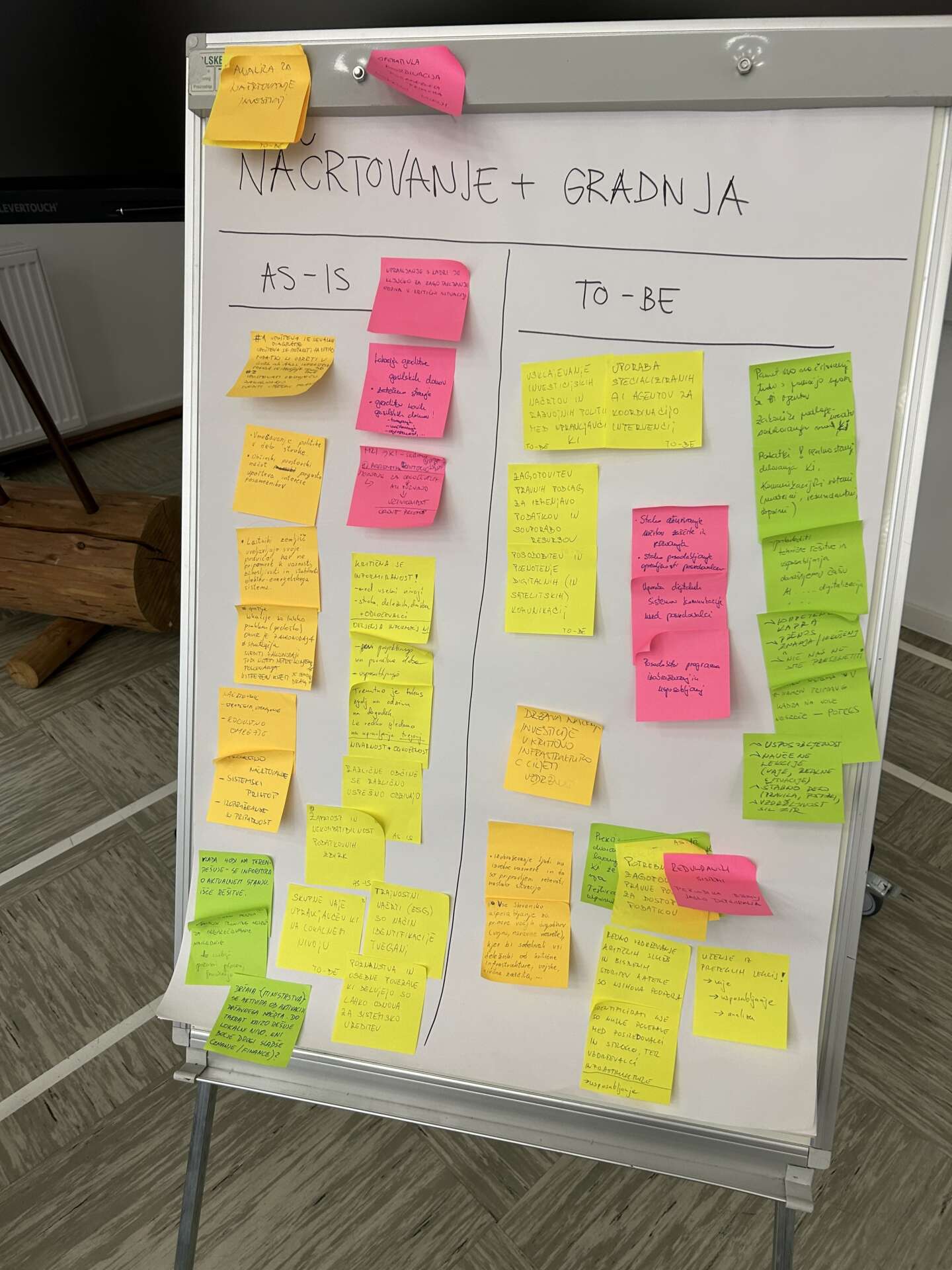
Planning and construction: Where and how do we place critical infrastructure in the environment, and which resilience standards do we incorporate into its design?
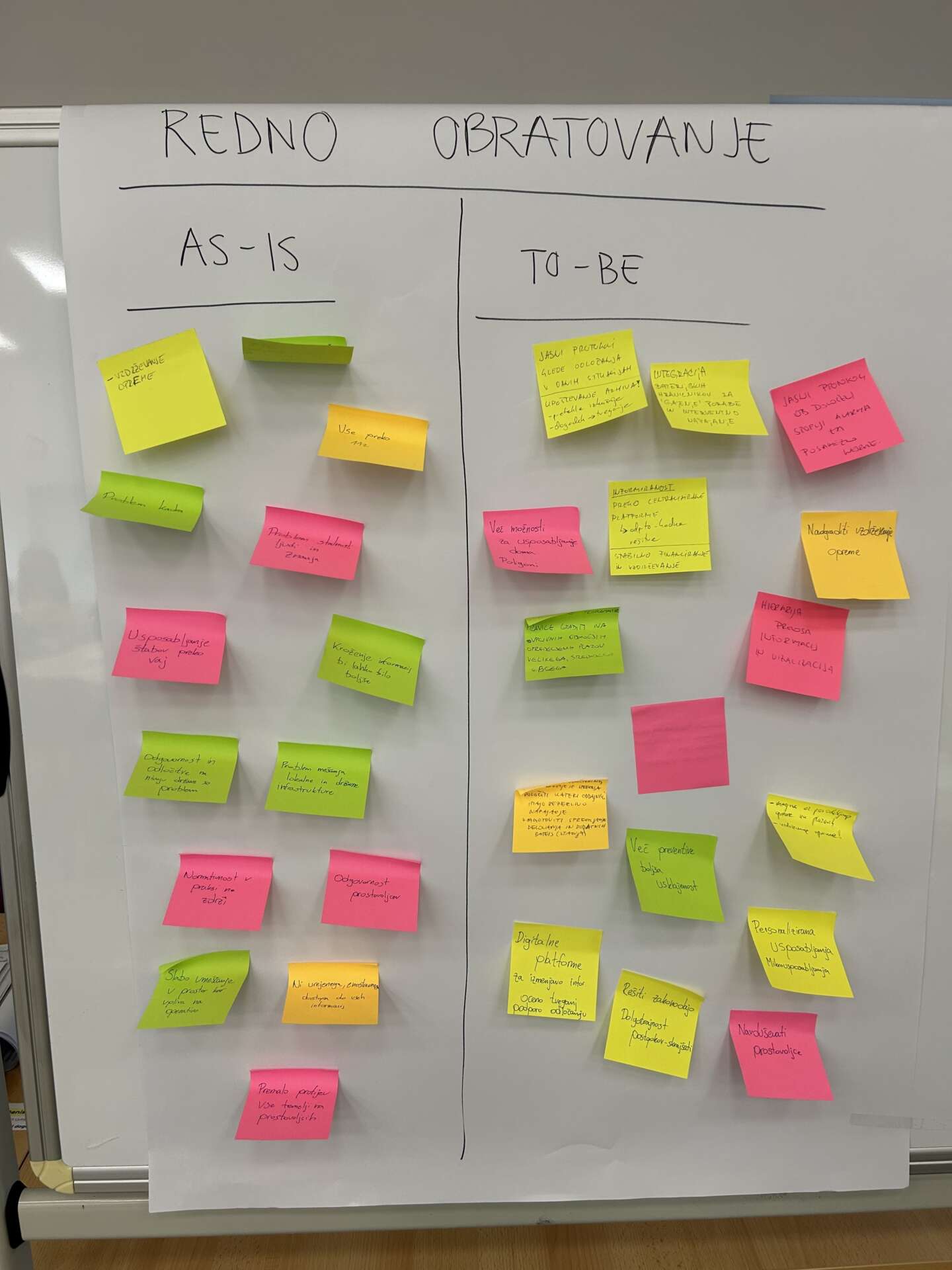
Regular operation: How do we monitor performance, detect disruptions, and respond to them in real time?
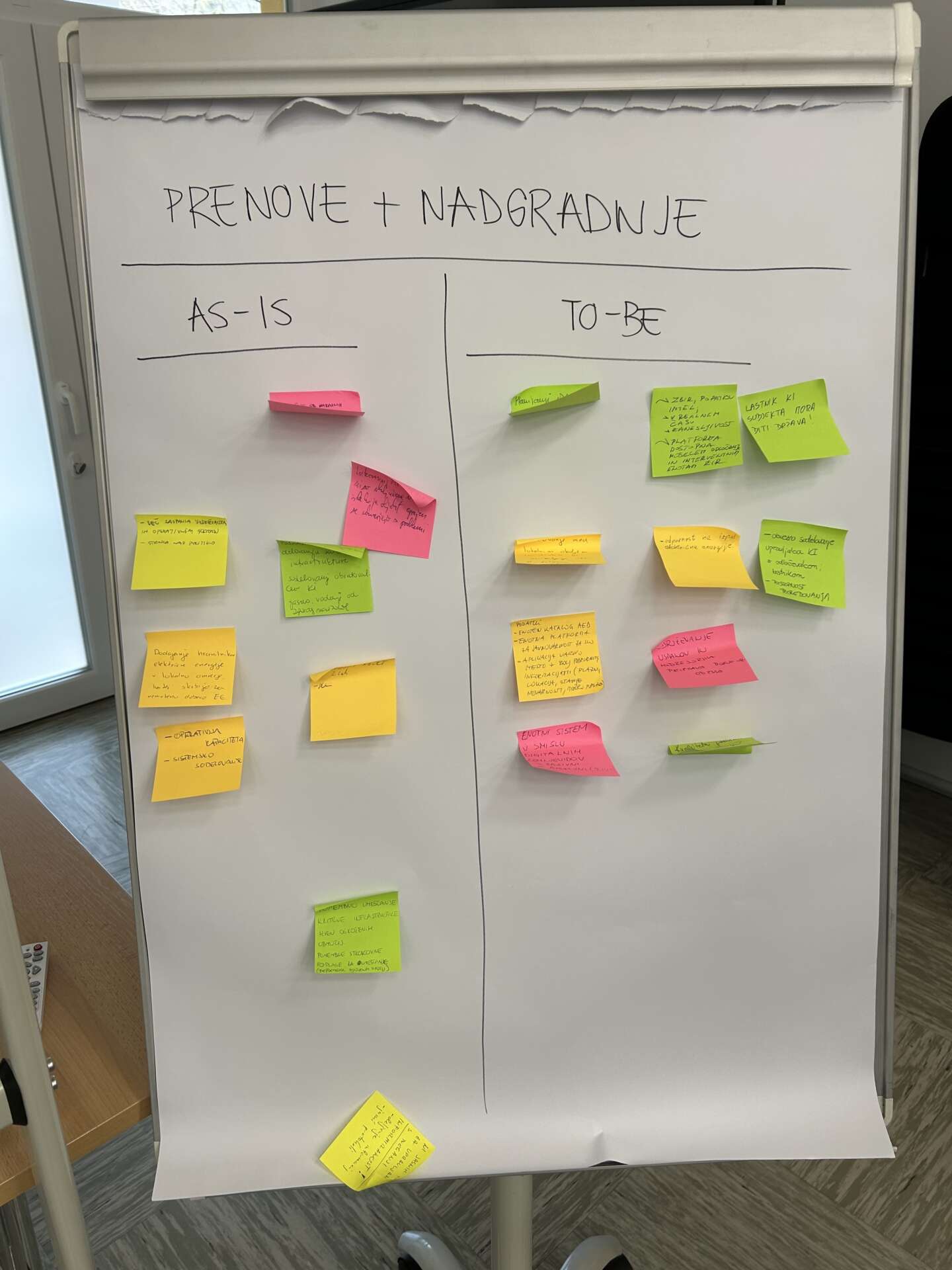
Renovation and upgrades: How do we decide what to renovate or upgrade, and when?
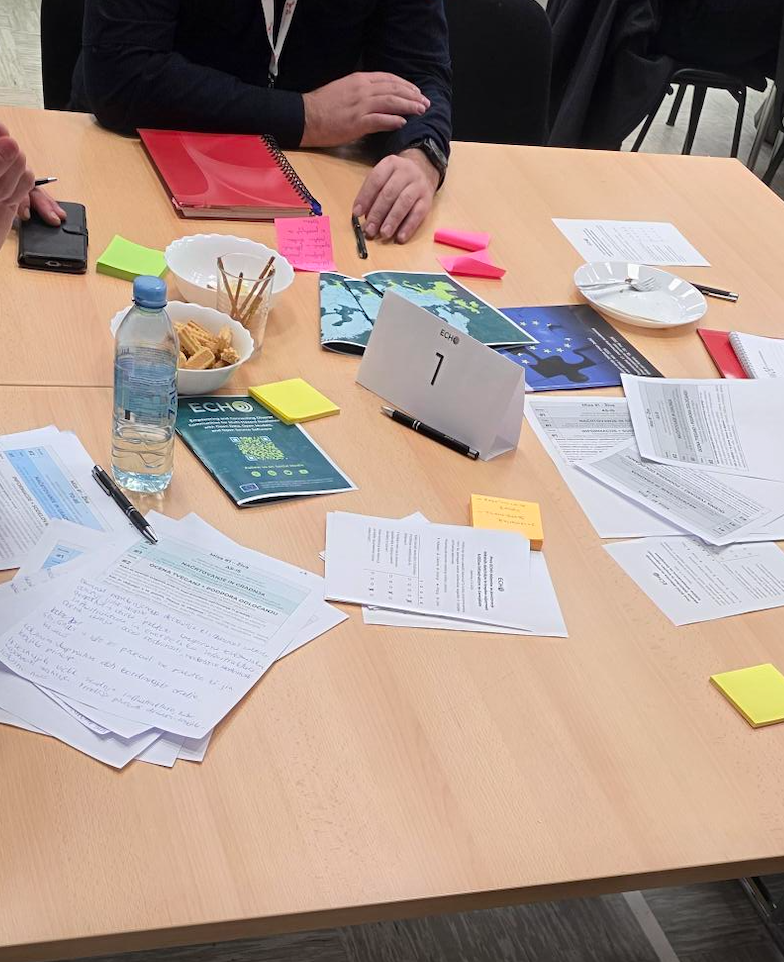
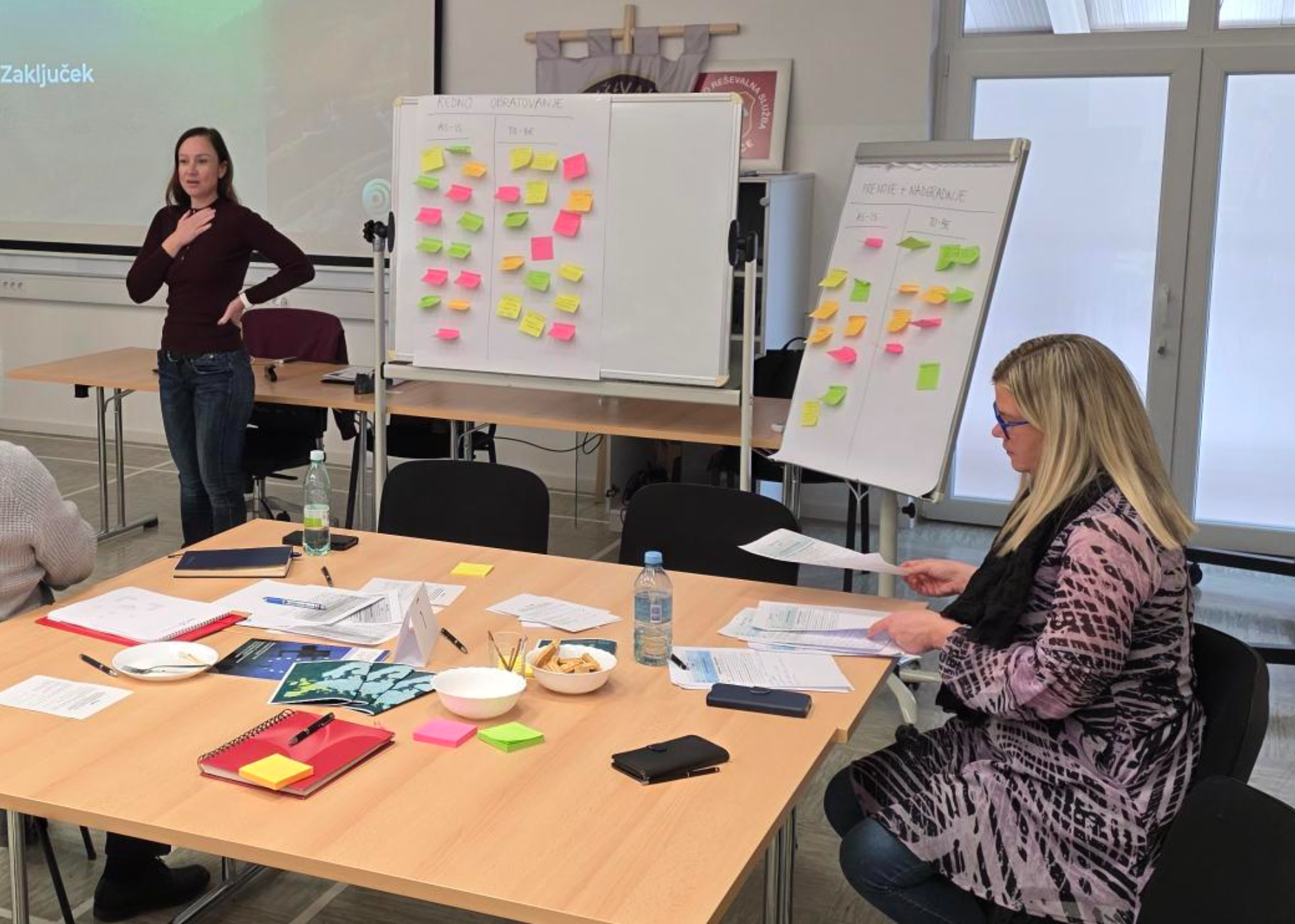
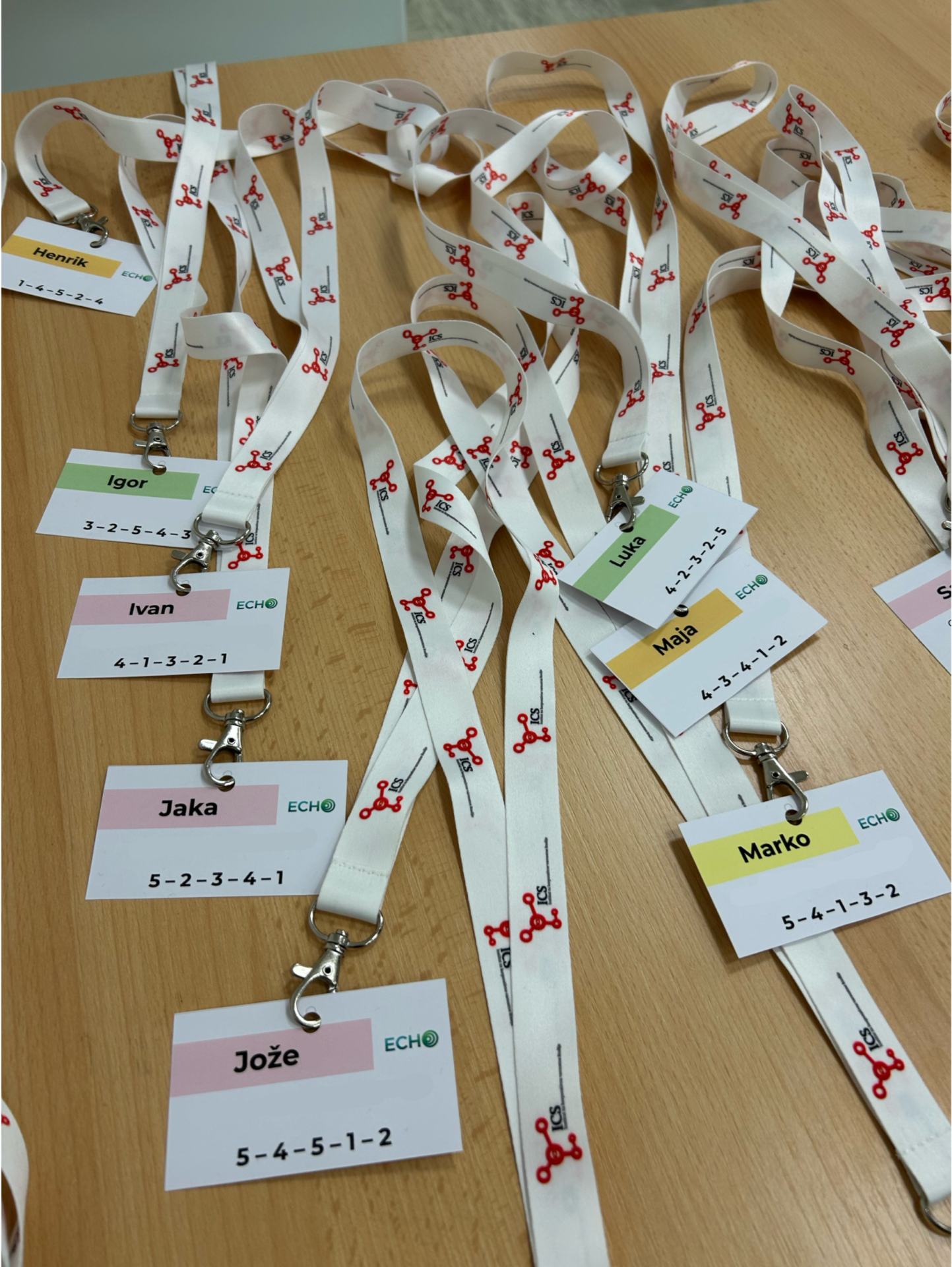
For each phase, participants first described how things are done today (AS-IS), and then formulated a vision for how they would like them to work in the future (TO-BE). Discussions took place in small groups of around five participants, and these groups were rearranged throughout the workshop. In this way, we ensured that the perspectives of different organizations, sectors, and levels of governance intertwined and complemented one another.
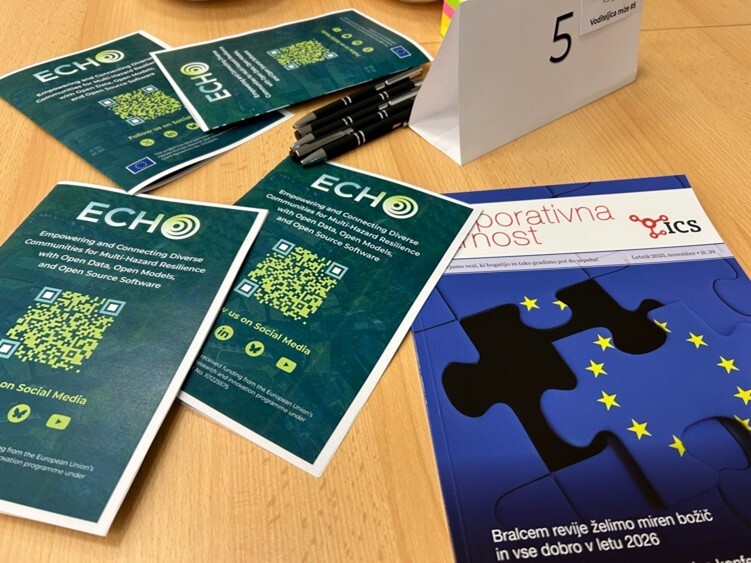
Despite the participants’ different roles and interests, similar challenges emerged repeatedly throughout the discussions. These included: (1) the gap between the frameworks set at the national level and the specific risks and needs at the local level; (2) the difficulties in developing investment plans that are driven mainly by asset deterioration and budget constraints rather than by current threats, risks, and lessons learned; and (3) disruptions in information flows at the places and moments when they are needed most.
Alongside these challenges, the workshop also generated a number of concrete proposals. Among them were: (1) establishing a shared platform for data exchange; (2) involving relevant stakeholders earlier in spatial planning and critical infrastructure planning; and (3) strengthening cooperation among decision-makers, critical infrastructure operators, and emergency and rescue services during peacetime.
The insights gathered during the workshop will serve as one of the key foundations for the project’s further work, in which we are developing a strategy for strengthening the resilience of critical infrastructure against today’s primarily natural hazards, various open-access digital tools for enhancing resilience, and a knowledge portal for the exchange of diverse data and experiences.
We sincerely thank all participants for their time, openness, and willingness to share even those aspects that are not working well today. Conversations like these are essential if we want our critical infrastructure to withstand the increasingly frequent and intense natural disasters in the decades to come.
More about the project: https://echo-horizon.eu/
Follow us on LinkedIn: https://www.linkedin.com/company/echo-project-eu
-
naprej
-
nazaj
naprej
-
nazaj
naprej
-
nazaj
naprej
-

nazaj
naprej
-
nazaj
naprej
-
nazaj
naprej
-
nazaj
naprej
-
nazaj


