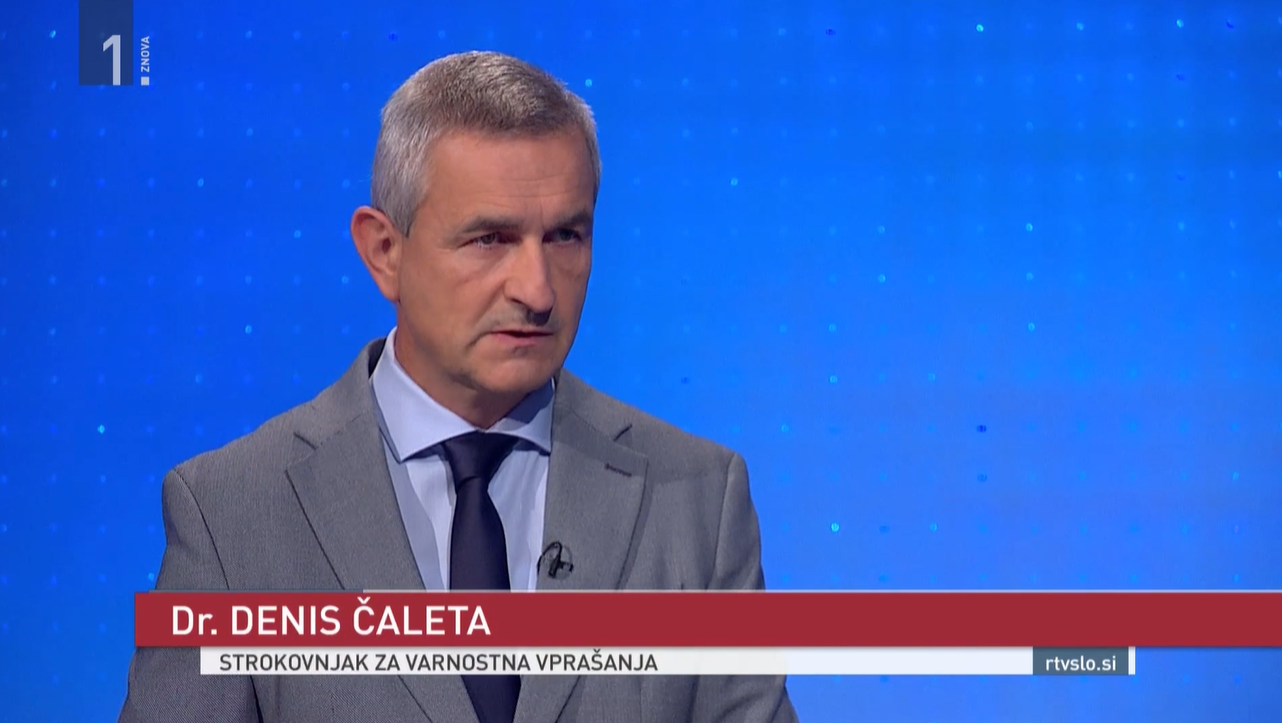
ICS representative as a guest on the RTV Slovenia news programme "Odmevi"
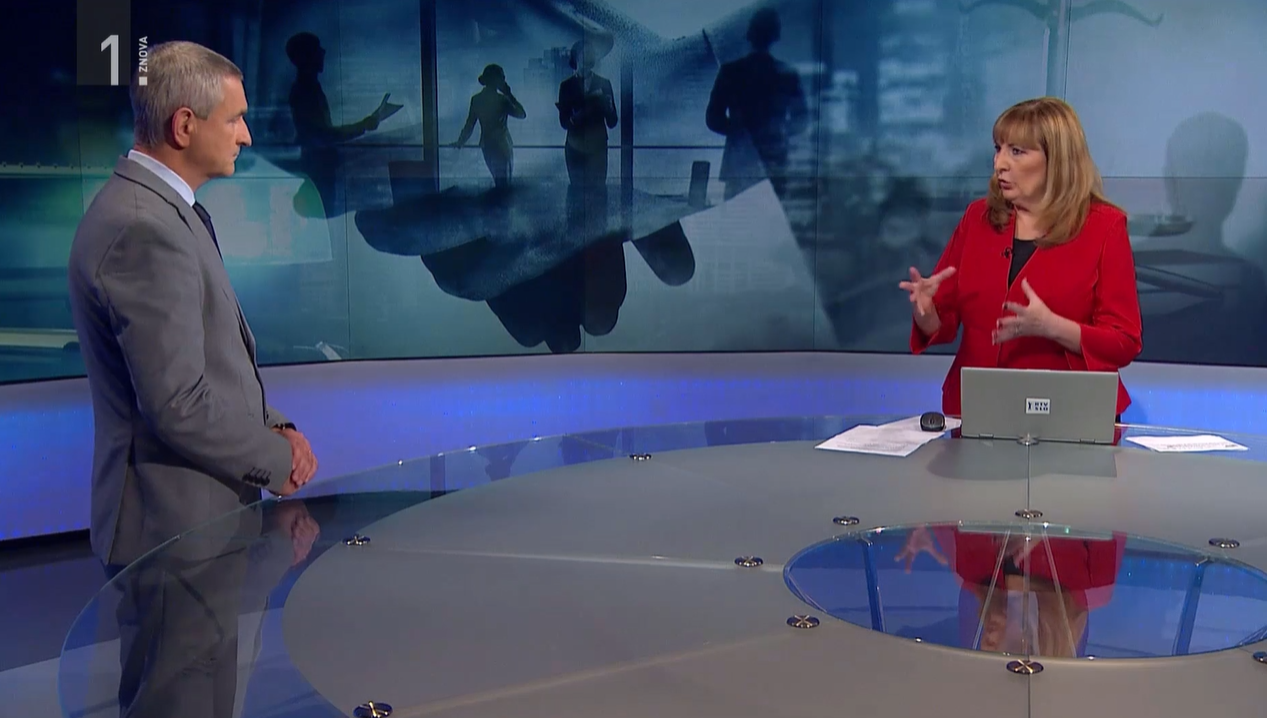
Denis Čaleta, Phd. was a guest on the news programme Odmevi on RTV Slovenia on Thursday, 26 October 2023.The discussion focused on a burning issue, namely the suspicion that the Prime Minister influenced the postponement of the arrest of two Russian spies, ostensibly because of the upcoming referendum and local elections.
Asked about the decision-making process regarding the arrest of foreign nationals, in particular in cases of espionage, Dr Čaleta stressed the complexity of such cases. He stressed that it is crucial to deal with the case in a broader timeframe. Gathering all the necessary evidence and information involves different intelligence agencies. However, focusing on the specific case that has been the focus of discussion over the last three days, the process involves various key authorities such as the Slovenian Security Intelligence Agency (SOVA), the Police, the competent prosecutor and the investigating judge who issues the arrest warrant. The prosecutor's office plays a leading role in this process and the Director of SOVA must inform the Director General of Police and the competent public prosecutor of such events. The Public Prosecutor decides when the arrest is to be carried out, and the Police is the operational authority that carries out the arrest. Dr Čaleta pointed out that according to the Law on the Slovenian Intelligence and Security Agency (ZSOVA), the Director of SOVA is empowered to request the suspension or postponement of certain activities in the event of suspicion of criminal offences threatening the security of the Republic of Slovenia or its constitutional order. However, this power is normally used in the early stages of an investigation, when evidence is still being gathered.
Asked whether the fact that the arrest is being carried out after the referendum and local elections on the initiative of SOVA is really the right operational-tactical reason, he said that from a professional point of view, he personally would say that these reasons are not the right ones.
He stressed that it was up to the public to form an opinion as to whether these decisions were motivated by professional or political reasons. However, it would be difficult to argue that it is professional arguments that influence the timing of such actions. It is important to note that the time window set out in the investigating judge's order provided a broader framework within which these activities could be, or were, carried out.
Finally, a question was raised about the role of politics in this case, especially with the involvement of foreign nationals, and who should be informed. Dr. Chaleta explained that the legislation in this area is clear. SOVA must inform the Prime Minister of any activity that could endanger the security of the RS or the constitutional order. If the matter concerns the President of the National Assembly or the President of the Republic or individual ministers and their competences, the Director of SOVA is obliged to inform the relevant persons. In this case, the Director of SOVE should also inform the Director General of the Police, the competent public prosecutor and the competent public prosecutor's office, pursuant to the law. In the case of reasonable suspicion, the public prosecutor takes charge of the entire procedure, while the Police act as the operational authority in the pre-trial proceedings, following their instructions and carrying out certain tasks.
It is important to note, however, that the Prime Minister may be informed about these matters, but may not influence the operational aspects of the procedure.
You can watch the full video on (https://365.rtvslo.si/arhiv/od...).