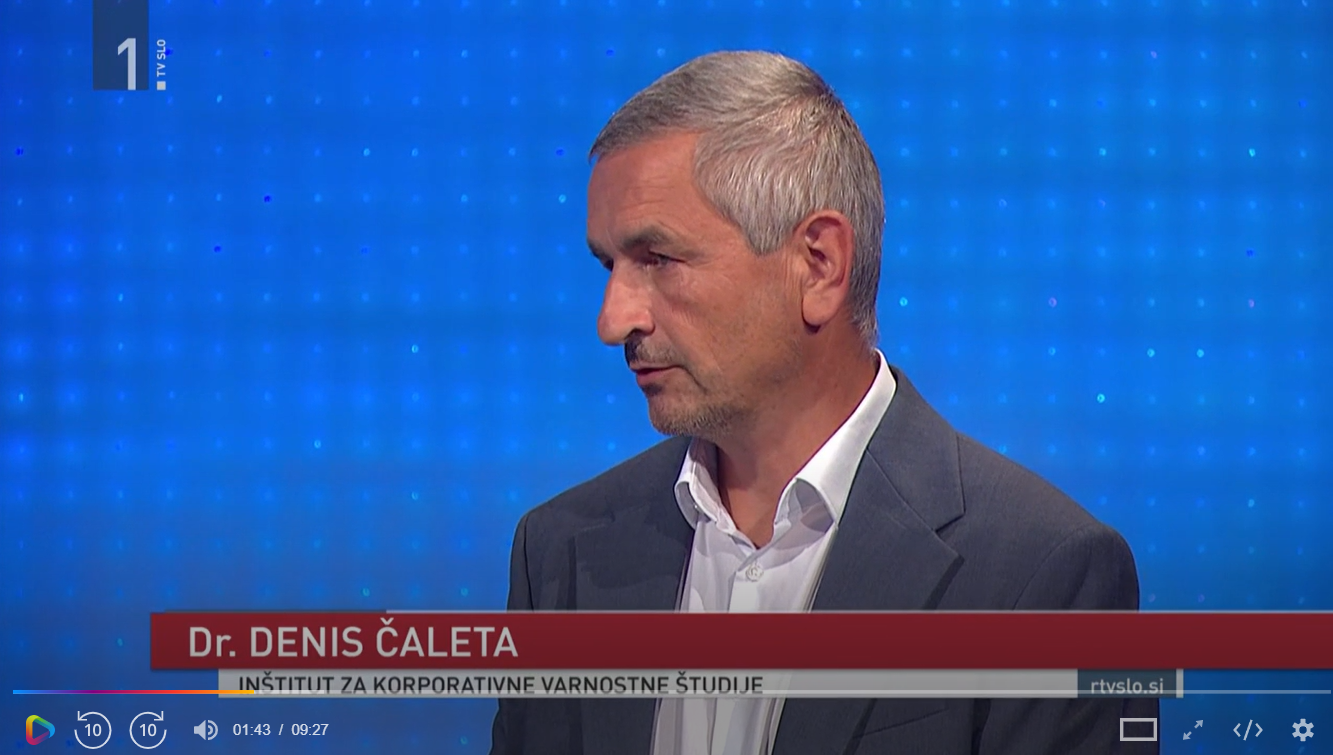
ICS representative as a guest on the RTV Slovenia news programme "Odmevi"
Dr Denis Čaleta was a guest on the news programme Odmevi on RTV Slovenia on Monday 18.09.2023. The topic of the interview was unauthorised border crossings.
When asked what are the reasons for the current surge in migrants, he replied that the first thing to be said is that Europe's geographical location will make it difficult for us to fend off migratory flows. One is factors such as natural disasters, wars and countries that are failing to provide their citizens with a normal existence, and so are pushing these migrants towards Europe. We also see from the figures that we are seeing the same countries every year, such as Afghanistan, Syria, Pakistan, Morocco. On the other hand, there are factors that are pulling these migrants towards Europe, with promises of a better standard of living and job opportunities. He pointed out that the problems European countries have with natural disasters and other things can also lead to poorer border controls. He pointed to the example of the last Bled Forum, where much was made of the enlargement of the European Union to the Western Balkans, but nothing was said about controlling migration, as a shortcoming. He said that a large number of people were bypassing official procedures, because Slovenia was, after all, a very transit country.
Asked what Slovenia can do at this moment to limit and ensure the security and protect the human rights of these migrants, he replied that this time too it has been shown that Croatia's admission to the Schengen area would again be a political rather than a professional move. This is already manifesting itself in practice, as the Republic of Croatia is unable to guarantee adequate security at its external borders, which in turn is reflected in the increased number of migratory flows coming to Slovenia. The Slovenian Presidency believes that it is absolutely necessary to enter into cooperation and offer Croatia maximum assistance, as this is in the strategic interest of the Republic of Slovenia. The worst thing that could happen is that Austria and Italy decide to reassert some kind of stricter control at their borders, and this could mean that Slovenia becomes a pocket for migrants, which we certainly do not want to happen. He stressed that the solution to these problems lies not only in a common European policy, but also in an operational approach to solving these problems, as each country alone cannot solve this problem.
Finally, he said that this topic is always welcome in some political wrangling, both within countries and between countries.