European Cyber Security Month puts the spotlight on older people and their digital skills
October is the European Cybercrime Awareness Month. This international initiative will bring together all EU Member States in activities to raise citizens' awareness of online dangers, in particular phishing scams, which represent a global security challenge. In Slovenia, the focus this year will be on older users and their digital skills. At the launch of the campaign, the National Cyber Security Response Centre SI-CERT and the Ministry for Digital Transformation held a joint press conference to present the challenges faced by older internet users and the help available to them.
According to Gorazd Božič, Head of the SI-CERT Response Centre, over the last two years they have noticed an increase of more than 30% in phishing scams or data fishing, where the most effective protection is awareness and information of the users. "We see that older users in particular are more likely to trust senders who ask for passwords and other data under the guise of banks, logistics companies or even public institutions (e.g. FURS). We also highlight other online scams, such as fake loans, love scams, where we also see more abuse among the elderly population, and misleading advertising from unverified providers of medicines, food supplements and medical devices. All these scams have one thing in common - they manipulate emotions, which we cannot fight with software solutions, but we need to teach users how to identify the main approaches of online fraudsters", summarised Mr Božič.
At the same time, the Ministry for Digital Transformation is also strengthening the digital skills of older people with concrete solutions, including through the Mobile Heroes project. As Minister Dr Stojmenova Duh pointed out, "Digital technologies have an impact on the quality of our everyday lives, and for this we need digital skills. According to research data, the proportion of users without digital competences is highest in the 65-74 age group, while no similar analyses have been carried out in the over-75 age group. There are also large differences between rural and urban environments. To this end, we have developed the Mobile Heroes project, which is implemented by the Velenje People's University and Simbioza in cooperation with the Ministry for Digital Transformation. The project contributes to the digital literacy of citizens across the country through local action.
Materials for computer course providers
As part of the Safe on the Internet awareness-raising programme implemented by the SI-CERT Response Centre, educational materials for providers of computer training courses have been prepared for this year's Cyber Security Awareness Month. They are a key link in the process of strengthening the digital skills of older people, providing them with important knowledge and, above all, encouraging them to become active users of modern digital services. At the same time, they themselves need a professional source of information and insight into current developments in the field of cyber security. The Safe on the Internet portal provides materials for four thematic workshops: how to spot online fraud, how to check an online shop, how to use smartphones safely and how to protect your emails.
For each thematic lesson, providers are provided with a video lecture, leaflets with detailed guidelines and the ABC of Online Safety, which explains how online fraudsters communicate.
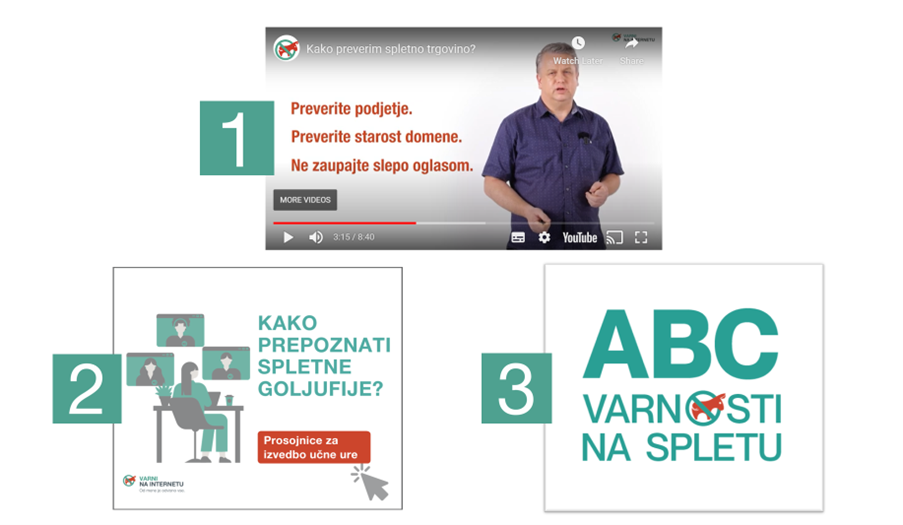
Figure 1: Everything you need to run the workshop - video, transparencies and the ABCs of Online Safety
Key message - don't be afraid to ask
As part of the European Cyber Safety Month campaign, older people will also be reached with videos on screens in city buses in Ljubljana, Maribor and Celje, in more than 200 shopping centres and in Ljubljana city centre. The short animations will highlight four of the most common scams at the moment - SMS and email phishing, attempted crypto-investment scams and fake sweepstakes. The central message is "Don't be afraid or embarrassed to ask for help!" because, as SI-CERT points out, one phone call can save you a lot of trouble. If you receive an unknown SMS or email claiming to be from a bank, a delivery company, a telecommunications company, even the FURS or the police, stop. Call and check if the message is from the sender, and the www.varninainternetu.si portal also provides very up-to-date warnings about such scams.
For further information, please contact press@cert.si.